
Animal Welfare and the Food System
Fish are friends not food... or are they???

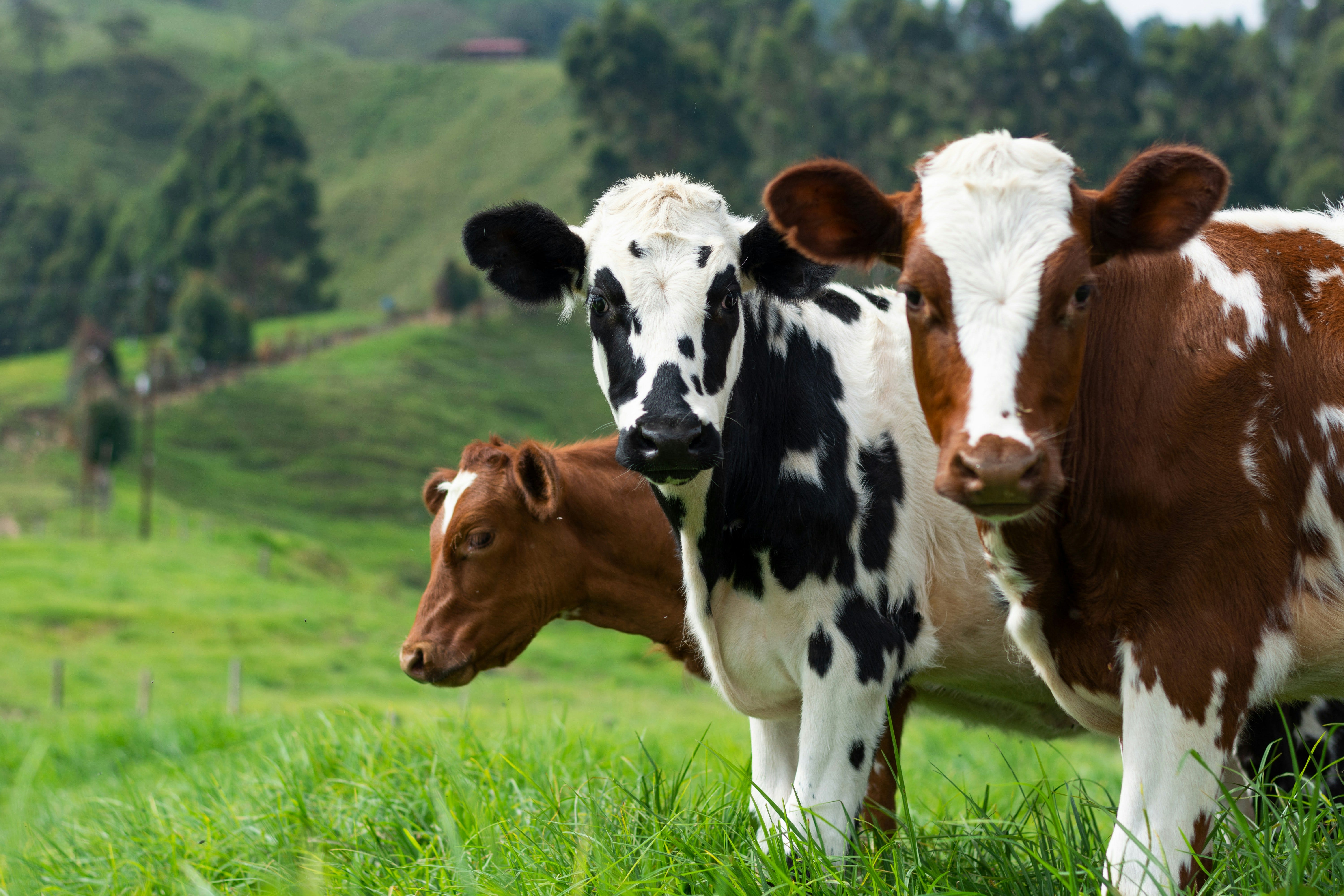
It is well documented at this point that animals in the conventional agricultural system are not treated humanely. Animals raised for consumption in the modern industrial agriculture system are kept in a hellish environment and given only a fraction of the life span they would otherwise have naturally. The main culprits are the four major meat-packing corporations that process over 80% of the meat destined for American consumption (USDA). This level of consolidation has led to a system that forces supply chains to comply with corporate practices that reduce their costs, often at the expense of the animals’ well-being (and the humans performing the labor).
Attempting to calculate the negative externalities of inhumane animal welfare is an interesting addition to the conversation that is not often discussed. Plus, in a world that values anything only for its contribution to the economy, what better way to analyze the situation? In his book Meatonomics, David Simon does just that by detailing a study, which he expands upon. The study examines how much of their own money the participants would be willing to spend to improve animal welfare. David extrapolates the findings to encompass what he considers the five leading issues affecting animal livelihoods. He concludes that if this were expanded nationwide, the country would spend $20.7 billion to improve animal welfare.
Yet this sum of money does not consider the value that the over 2 billion animals (cowspiracy) raised for slaughter in America each year would put on their own lives. Although they don’t have any money of their own to spend. It is simply an arbitrary number that humans deemed adequate.
This is no doubt a significant amount of money, and it is pretty unrealistic to think the US would spend this chunk of change on something this trivial. Yet I think this still offers a unique perspective on how capitalism exploits natural resources, a term that seems disrespectful to a living organism.
It is also important to recognize the other side of the coin, in that many vegan activists take the sentiment of caring for animals a little too far. As sad and unfortunate as it may be, it must be acknowledged that all life must end at some point; it is simply part of nature, something all living things are a part of. Every organism fulfills a function in the ecosystem in which they live. Part of the service it provides comes at the end of life. The resources that the life-sustaining organism utilizes throughout its life are recycled and repurposed to sustain new life. Suggesting that we don’t eat animals is to reject the laws of nature, and prevents them from fully satisfying their function in their ecosystem, essentially rendering their species as useless and unfit for life in the first place.
On another level, to say it is morally wrong to kill an animal to feed other life is a privileged position to be coming from. Animal foods provide an abundance of critical nutrients that are not found as a whole in many other foods. Although it is technically feasible for humans to consume a 100% plant-based diet in the modern world, it is not accessible everywhere due to economic, nutritional, and environmental factors. Animal foods offer a wealth of nutrients that any hungry human would gladly welcome.
Moving forward, no matter what you put on your plate, it still requires the termination of some form of life. Whether consuming animals that are killed themselves or fruits, veggies, and mushrooms, which involve the termination of fungi, microbial creatures, and other plant life in order to harvest, the food we eat requires another form of life to end. Some even go so far as to mention that eating meat from a cow, which involves the death of only one life and provides many different cuts/meals, is more humane than the number of organism deaths involved in industrial agriculture’s ever-pervasive row cropping strategies. Although I think this is a bit shallow, as this perspective does not consider the vast amount of life sustained in the gut microbiomes of the animals being slaughtered.
So, what would a humane system look like? How could we possibly respect Mother Nature while also consuming all the variety and abundance she has to offer? And specifically, how can we continue to consume meat and other animal products in a more respectful manner? I think that Will Harris, a farmer in Georgia, offers an interesting perspective on this. When he evaluates and works with his land and animals, he views it all as part of a much larger system at work. For example, he doesn’t just make decisions based on one individual cow; he considers the whole herd and makes decisions that are best for the entire herd. He notes that although individual cattle will come and go as time passes, the herd remains.
A direct action he takes, for example, that impacts the whole herd, is choosing which cattle he wants to use as parents for the next generation, picking the healthiest, strongest, and most evolved to thrive on his specific plot of land. If he were looking out for each individual cow, he would ensure that each cow passes on its DNA from one generation to the next. This is not necessarily what is best for the herd or the larger ecosystem of which they are a part. Maintaining this perspective of the larger system in which we operate is essential when considering many of the impactful ways we engage with nature, most predominantly through our farming practices, and it should not be diminished in terms of animal welfare either.
At the end of the day, animals and all life, for that matter, should be granted the opportunity to live a full life, express their natural behaviors, and participate fully in the natural life cycle. The conventional system in which we obtain and consume our food is exploitative of nature and the many organisms that inhabit it. At both the individual and societal levels, there is much more we can do to show respect for the lives we consume in order to maintain ours. Yet, it is simply a part of nature that it works this way, and to ignore that is to do just as much injustice. Ultimately, I think it is this fact that we are the only creatures capable of comprehending the larger picture and being grateful for the life our food had to give in order for us to continue living that gives us the right to consume whatever food we individually decide to put on our plate.
Previous Section:
Human Nutrition P. 2 (Coming Soon)
Next Section:
Economics and the Food System (Coming Soon)